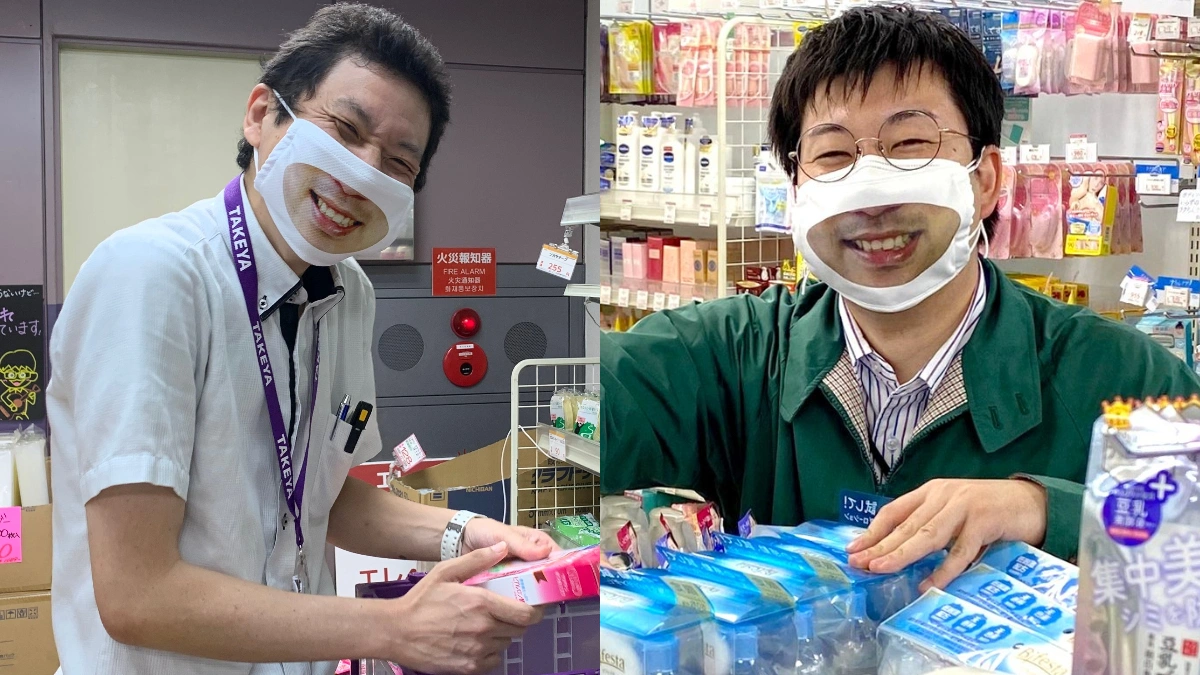

In the world of customer service, a smile is often considered the most valuable uniform an employee can wear. But what happens when a global pandemic or health regulations force that smile behind a surgical mask?
In a move that perfectly encapsulates Japan’s unique blend of sincere hospitality (Omotenashi) and slightly dystopian ingenuity, a discount store in Tokyo has grabbed global headlines. Their solution to the “masked face” problem? The Smile Mask.
While the intention was to spread joy and maintain a friendly atmosphere, the result has sparked a fiery debate across the internet: Is this the pinnacle of customer service, or a terrifying glimpse into a cyberpunk future?
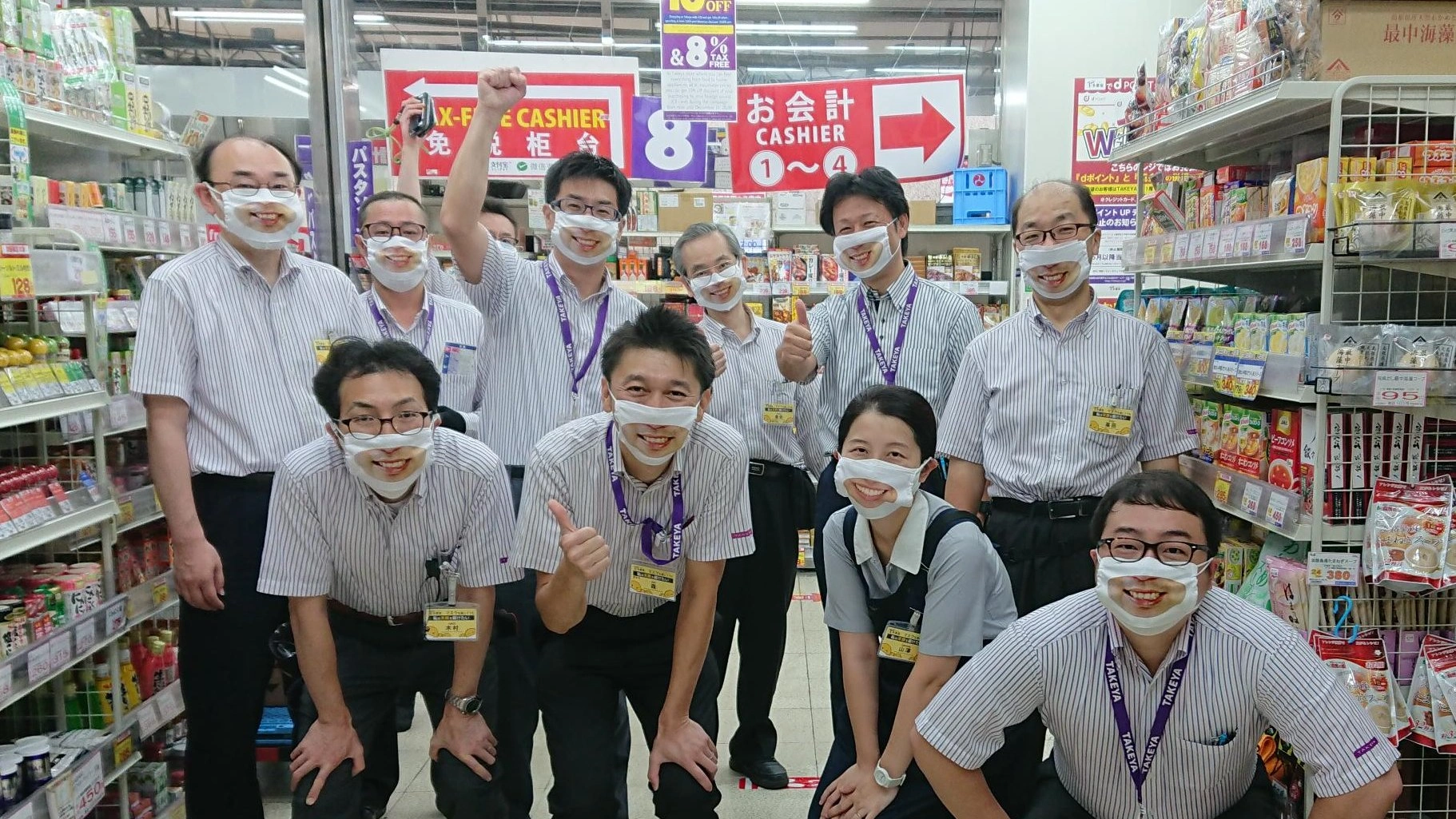
The Origin: The “Smile Campaign” at Takeya
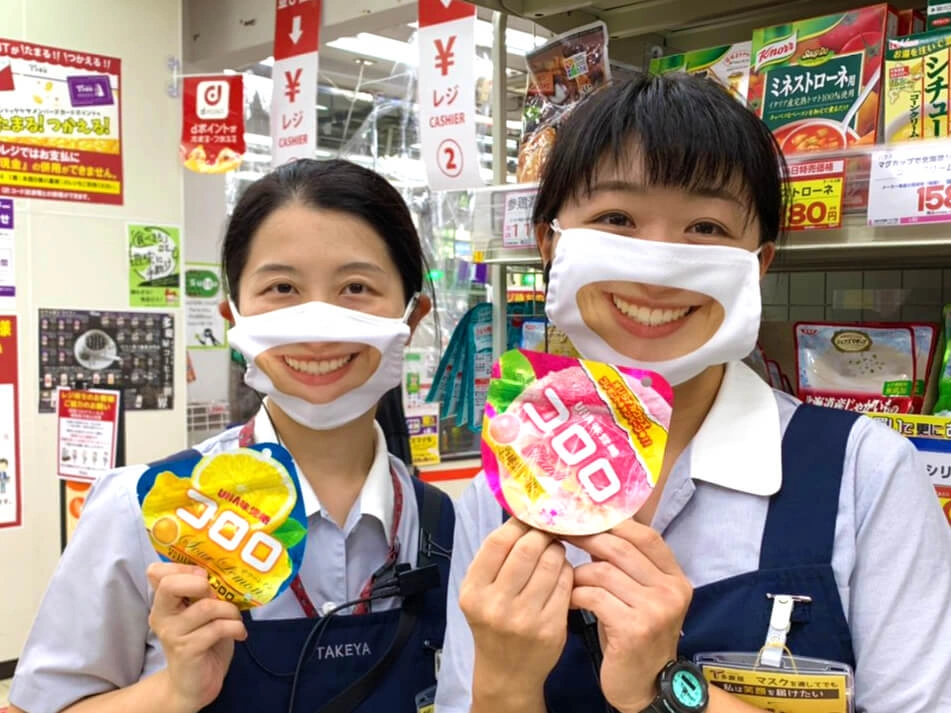
The trend originated at Takeya, a well-known discount store located in the bustling Ueno district of Tokyo. Known for its chaotic but charming variety of goods, Takeya has always prided itself on approachable staff.
However, as mask-wearing became the standard (and often mandatory) protocol in Japan well before and during health crises, store management noticed a problem. With half the face covered, it became difficult for staff to convey warmth. The eyes might be smiling, but the sentiment was often lost.
To combat this “cold” appearance, the store launched the “Smile Campaign.” They didn’t just ask staff to smile harder; they equipped them with cloth masks printed with a photorealistic, beaming smile—complete with dimples and teeth.
Why did they do it?
- Visual Communication: To reassure customers that they are welcome.
- Standardization: To ensure every customer receives the exact same “level” of smile.
- Morale: To bring a sense of humor to a stressful work environment.
The Cultural Context: The Weight of Omotenashi
To understand why a store would go to such lengths, one must understand the Japanese concept of Omotenashi (hospitality).
In Japan, customer service is not just a job; it is a performance of respect. The “customer is god” (okyakusama wa kamisama desu) is a prevailing philosophy. A flat, expressionless face is seen as a failure of service.
The Smile Mask addresses a specific cultural anxiety:
“Even if a worker is tired, they must appear energetic. The mask essentially automates emotional labor, allowing the worker to ‘smile’ without using their facial muscles.”
The Internet Reacts: Uncanny Valley or Pure Comedy?
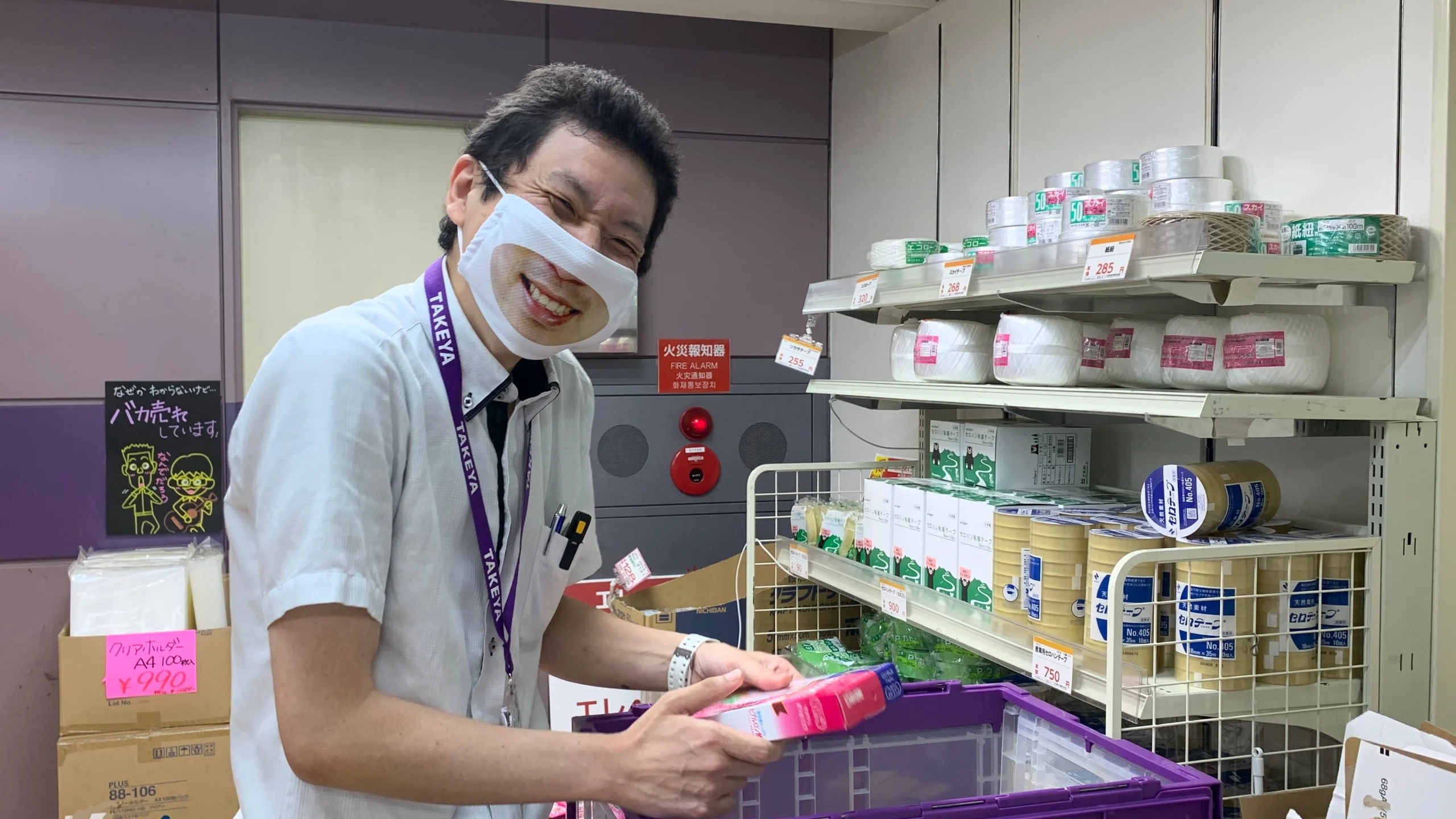
While the store’s intentions were wholesome, the execution triggered what psychologists call the “Uncanny Valley” effect. This occurs when an object looks almost human, but not quite perfect, creating a sense of unease or revulsion.
When photos of the Takeya clerks hit social media platforms like Twitter (X) and Reddit, the reactions were polarized:
- The “Creeped Out” Crowd: Many users compared the masks to horror movie villains or characters from the dystopian video game We Happy Few. The fixed, unblinking nature of the printed smile, combined with real human eyes that might look tired, creates a jarring disconnect.
- The “Amused” Crowd: Others found it hilarious and distinctly “Japanese.” It fits into the “Chindogu” genre—inventions that are technically useful but socially awkward.
- The “Sympathetic” Crowd: Some netizens pointed out that this might actually be dystopian for the workers, who are now forced to wear a permanent expression of happiness regardless of how they actually feel.
Beyond the Joke: The Future of Face Coverings
Is the Smile Mask just a fleeting viral trend, or does it signal a shift in how we interact? Interestingly, this isn’t an isolated incident. Various tech companies and designers have been experimenting with:
- Transparent Masks: Clear plastic sections to show the mouth (often used for the hearing impaired).
- LED Masks: Digital masks that can display emojis or text.
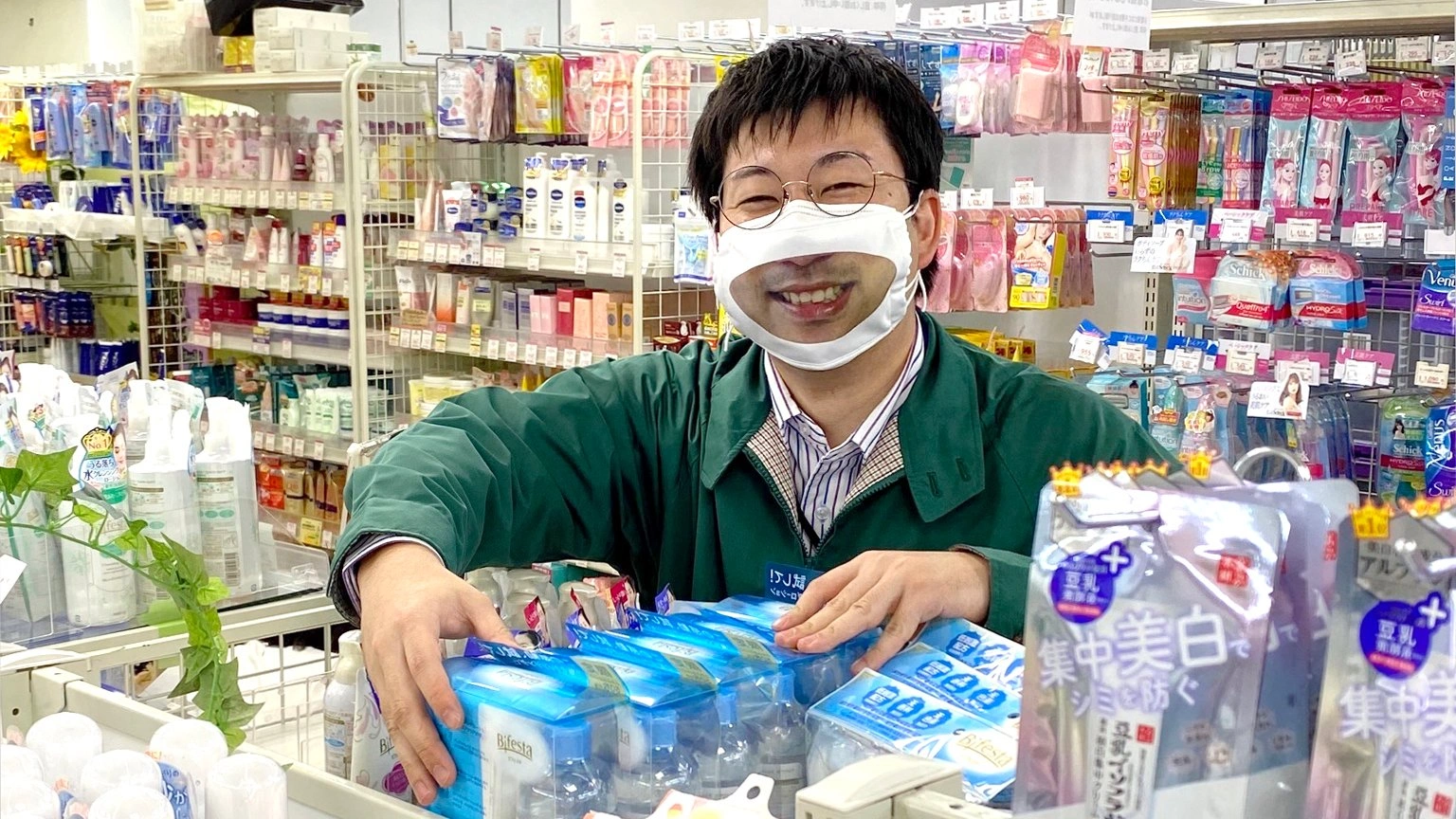
- The Takeya Approach: Low-tech, printed realism.
While the “Smile Mask” likely won’t replace standard surgical masks in hospitals, it highlights a crucial human need: We crave facial connection. In a world increasingly mediated by screens and coverings, we will go to absurd lengths to see a human face—even if it’s printed on polyester.
Conclusion: A Smile is Worth a Thousand Words (Even a Fake One)
The Smile Masks of Japan serve as a fascinating case study in cultural priorities. Only in a nation that values social harmony and hospitality so deeply would a store invent a way to smile through a piece of fabric.
Whether you find them charming or terrifying, you have to admire the dedication. It forces us to ask ourselves: How much of our daily social interaction is a performance? And if it is a performance, does it matter if the smile is real, as long as the mask fits?
What do you think? Would you shop at a store where everyone is wearing a permanent smile, or would you run for the exit? Let us know in the comments below!
Reference & Context
Source: Based on trends reported by The Smart Local Japan and social media reactions regarding Takeya Discount Store, Ueno.