By Tun Daily
In the high-stakes world of fashion, we are accustomed to seeing silk, satin, and chiffon gracing the runways of Paris and Milan. However, a stunning new trend emerging from the heart of rural China is challenging every preconceived notion of luxury.
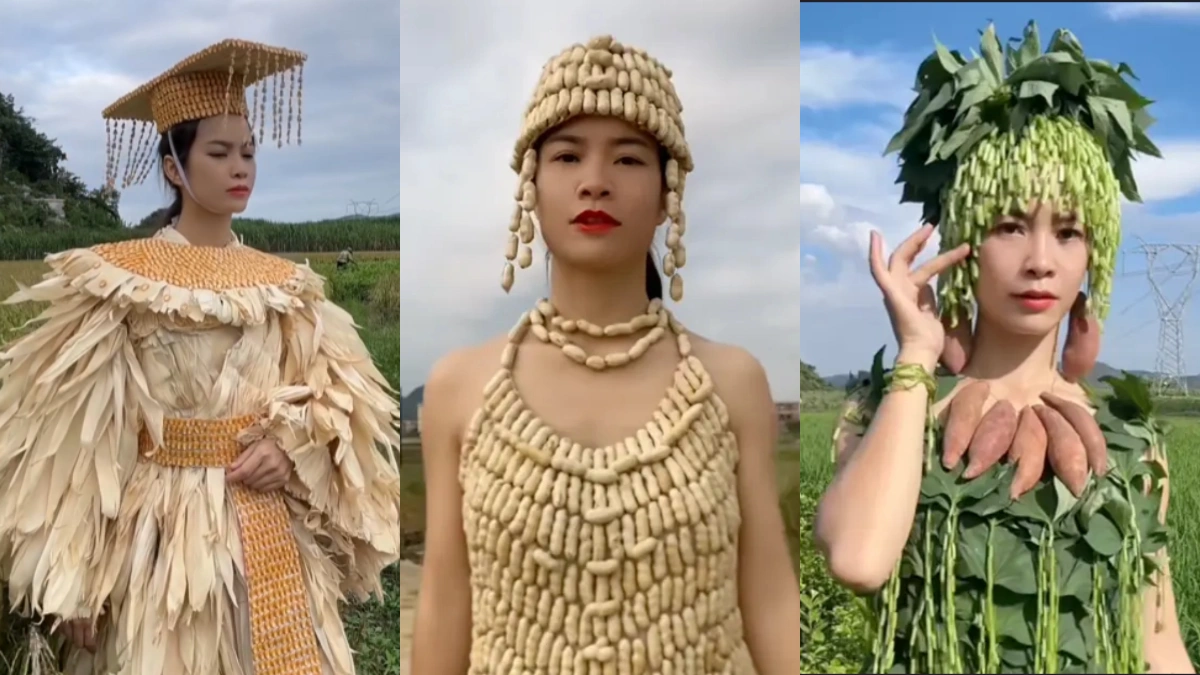
A creative woman from rural China has captured the world’s attention not with diamonds or designer labels, but with peanut shells, corn husks, and vegetable leaves. Her videos, which show her striding confidently through village paths wearing elaborate gowns made entirely of farm waste, have gone viral. But this story is more than just a fleeting internet moment; it is a profound statement on creativity, resourcefulness, and the future of sustainable fashion.
This article dives deep into the artistry behind these vegetable creations, the rise of China’s “rural influencers,” and what the fashion industry can learn from the countryside.
The Art of “Agri-Couture”: Designing with Nature
While the concept of “eco-fashion” often implies recycled polyester or organic cotton, this rural creator takes it literally. Her designs utilize the natural textures and colors of agricultural byproducts to mimic high-end fabrics.
1. The Peanut Shell Gown
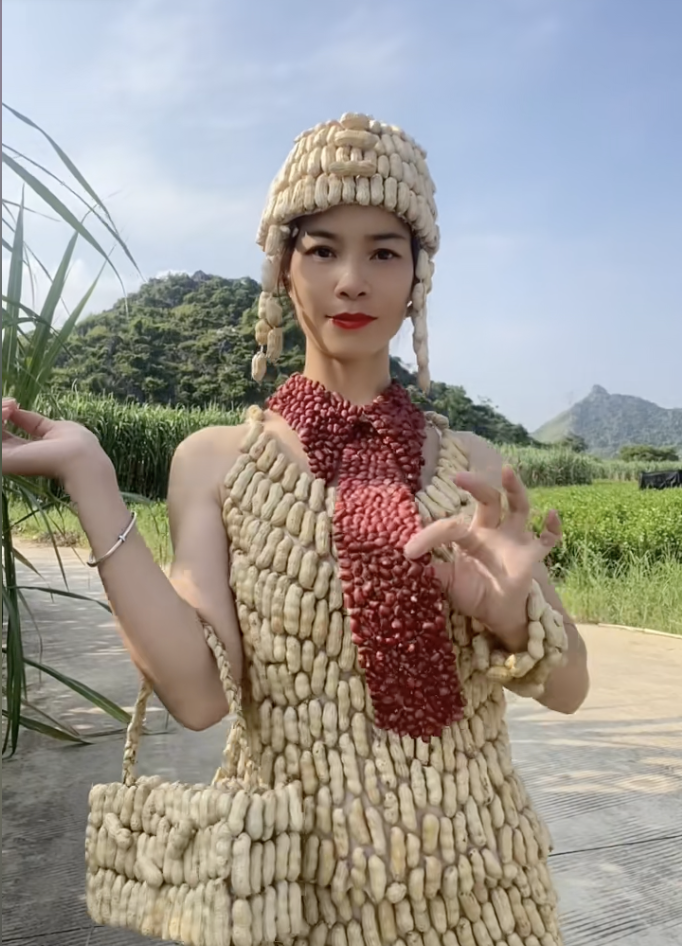
Perhaps her most famous creation is the peanut shell dress. To the untrained eye, peanut shells are merely compost. To an artist, they offer a rigid, textured material similar to beaded fabric or sequins.
- The Process: Constructing such a garment likely requires piercing thousands of shells and threading them together or gluing them onto a base fabric.
- The Aesthetic: The natural beige tone of the shells gives the dress a rustic, earthy elegance, resembling a monochrome couture piece.
2. Corn Husk Ballgowns
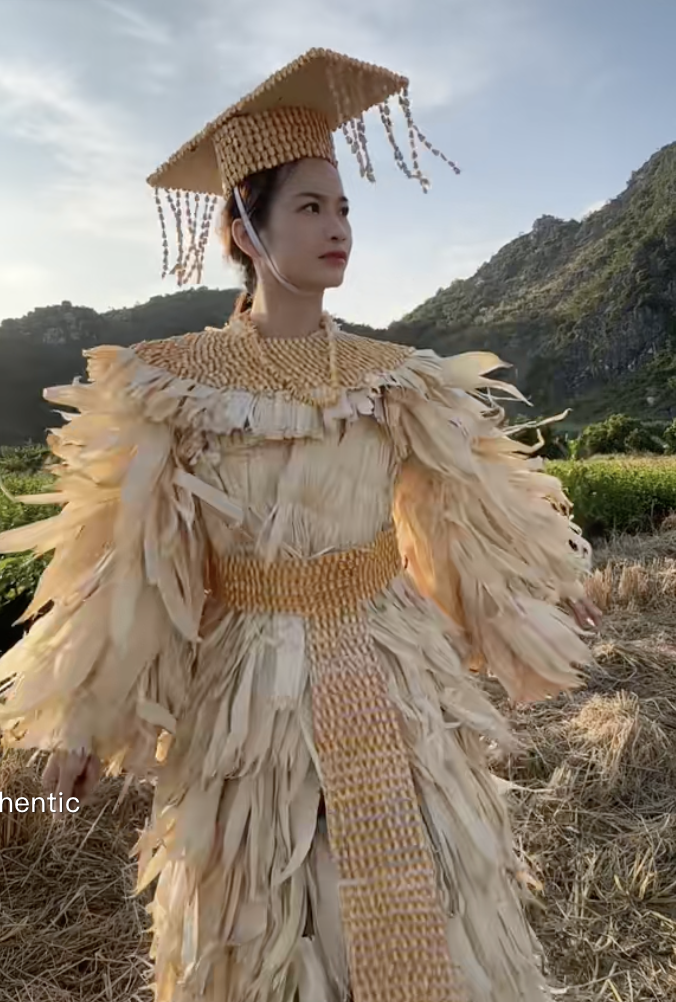
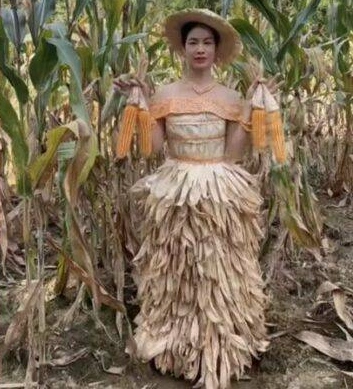
Corn husks have long been used in traditional crafts, but here they are reimagined as flowing skirts. When dried, husks take on a pale yellow hue and a stiff yet pliable structure, perfect for creating volume in a skirt without heavy crinolines.
3. Vegetable Leaf Accessories
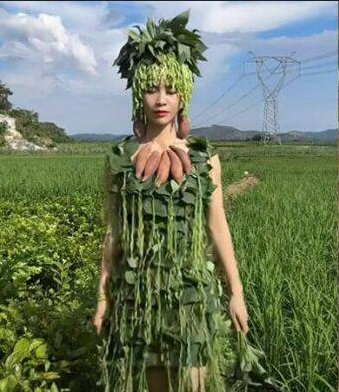
From hats made of giant cabbage leaves to capes woven from vines, every element of the farm is utilized. This represents zero-waste fashion in its purest form. Once the video is shot, the materials can return to the earth as compost, leaving no carbon footprint.
The Rise of the “Village Supermodel”
This story is part of a larger digital phenomenon in China known as “Rural Revitalization” via short-video platforms.
Apps like Douyin (the Chinese version of TikTok) and Kuaishou have given farmers a platform to showcase their lives. However, unlike the peaceful, slow-living aesthetic of creators like Li Ziqi, this new wave is loud, bold, and fashion-forward.
Why is this content so successful?
- Contrast: There is a striking visual irony in seeing “runway walks” performed on dirt roads, with stray dogs and tractors in the background instead of front-row celebrities.
- Authenticity: In an era of filters and Facetune, audiences crave the raw, unfiltered creativity of someone making something beautiful out of nothing.
- Confidence: The woman’s fierce “supermodel walk” sells the garment. She proves that style is not about the price tag of the clothes, but the attitude of the wearer.
Sustainability: A Lesson for the Fashion Industry
The global fashion industry is responsible for an estimated 10% of global carbon emissions. Fast fashion results in millions of tons of textile waste ending up in landfills annually.
While we cannot all wear peanut shells to the office, this viral trend highlights a critical philosophy: Circular Design.
“True sustainability isn’t just about buying expensive eco-friendly brands; it’s about reimagining the value of what we already have.”
Key Takeaways for Modern Fashion:
- Biodegradability: Unlike synthetic fibers that take hundreds of years to decompose, organic materials return to the soil.
- Local Sourcing: Using materials available in one’s immediate environment reduces transportation emissions.
- Upcycling: Viewing “waste” (like shells and husks) as a resource rather than trash is the mindset shift required for a circular economy.
The Viral Factor: What Data Tells Us
According to social media trends on platforms like TikTok and Instagram, hashtags related to #DIYFashion, #Upcycling, and #RuralLife have seen a 300% increase in engagement over the last two years.
Why does this matter? It signals a shift in consumer behavior. People are moving away from polished, manufactured perfection and gravitating towards ingenuity. This rural Chinese woman’s peanut shell dress isn’t just a funny video; it is content that aligns with the global zeitgeist of sustainability and individual expression.
Conclusion: Fashion is Everywhere
The viral story of the Chinese woman making clothes from peanut shells reminds us of a simple truth: Limitations breed creativity.
Without access to expensive fabrics or sewing machines, she turned to the land. In doing so, she created something far more memorable than a store-bought dress. She has transformed the humble peanut shell into a symbol of artistic defiance and rural pride.
As the world continues to grapple with the environmental cost of fashion, perhaps the answers aren’t found in high-tech laboratories, but in the traditional wisdom of using what the earth provides.
📌 Reference & Context
This article analyzes the viral fashion trends originating from rural China, as reported by various international outlets and social media platforms. The creativity demonstrated highlights the potential of agricultural byproducts in art and design.